
Some thoughts from October 2026, while we’re still figuring out what this technology might become.
I recently fell in love with some AI creations by an artist called Kelly Boesch. And when I say fell in love, I really do mean it. Her work is extraordinary. Beautiful, imaginative, occasionally surreal, and quite unlike anything I’d seen before. It took me quite a while to work out what I was actually looking at, never mind how she had created it.
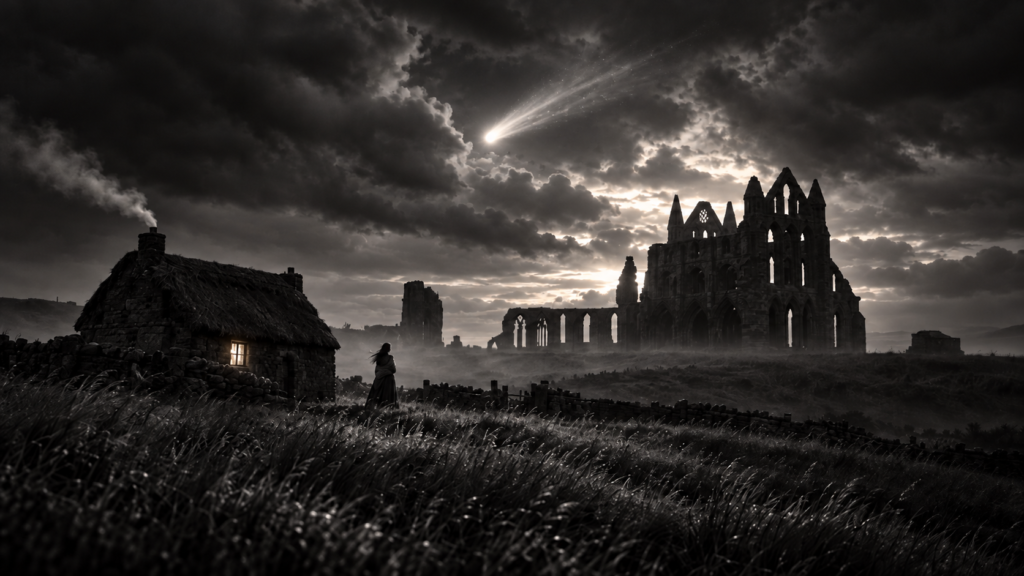
Siren Cottage Presteby Abbey Headland Streonshalh Whitby
From what I can gather, Kelly uses tools such as Midjourney to create characters and scenes, before bringing them to life through animation and music. But I suspect there’s a great deal more to the process than simply typing a few words into a computer. I imagine she has very definite ideas about characters, composition, atmosphere, colour palettes and the emotions she wants her work to convey. The technology might generate the pictures, but the creative vision is clearly hers.
And that’s an important distinction.
I don’t believe for one moment that Kelly simply sits down at her computer, types “make me something funky” and watches a masterpiece emerge. Her creations have a recognisable artistic identity, which suggests considerable thought, experimentation and judgement. The talent, as far as I’m concerned, belongs to Kelly. Midjourney and the other AI systems are simply some of the tools available to an artist in 2026.
But there’s something else about her work that has rather surprised me. The music.
I never thought I’d see the day when a song created using artificial intelligence would be going around and around in my head, just like a favourite track by a conventional musician. Yet here I am, with the words “You were Alice before the fall” seemingly permanently installed in my brain cells. The melody is beautiful, the arrangement is wonderful, and I find myself wanting to listen to it again and again.
I’m not entirely sure how I feel about that. But I do know that I love the song. It’s fucking amazing.
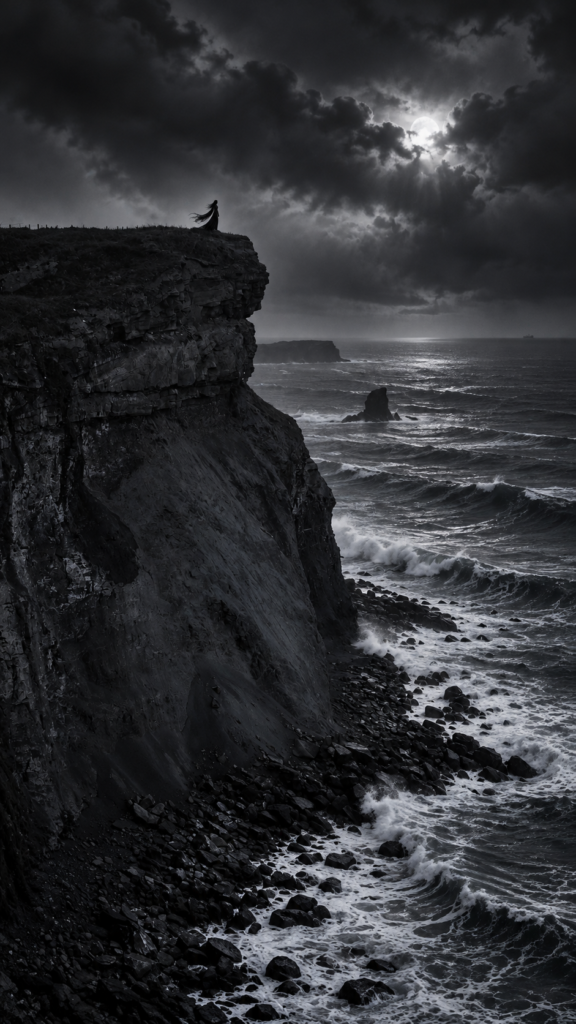
And perhaps that’s the most interesting part of all. The music has moved me emotionally, despite knowing that artificial intelligence was involved in its creation. If a melody makes you feel something, does the technology used to produce it somehow invalidate that feeling? Are we supposed to enjoy something less once we discover how it was made?
I genuinely don’t know the answers to all these questions. But I find them fascinating.
Now, I’m certainly no Kelly Boesch. I’ve spent around twenty years taking photographs and making videos, but this is a completely different creative process for me. Nevertheless, I’ve recently started experimenting with AI myself, using ChatGPT, Google’s Veo video technology and Suno for music.
And something else has surprised me. It’s remarkably affordable.
For the cost of a few modest monthly subscriptions, I can experiment with ideas that would previously have required actors, sets, musicians, animators and a fairly substantial budget. I’m fortunate enough to have established YouTube and Facebook channels, where monetisation can potentially cover those subscriptions. In other words, I can experiment, learn, make mistakes and perhaps even break even while I’m doing it.
That’s quite an extraordinary opportunity when you think about it.
So I’ve been playing. Creating strange scenes, inventing characters, making music and attempting to bring imaginary worlds to life. Some experiments work beautifully, others don’t. Some are probably quite poor, and I wouldn’t be surprised if people looked at them and thought I had absolutely no idea what I was doing.
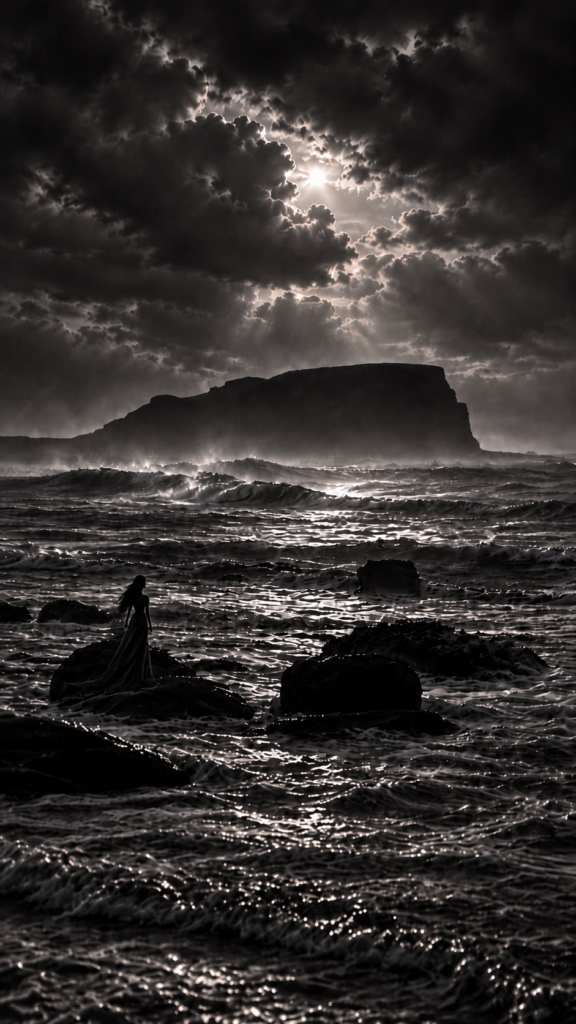
The Siren Of Saltwick Bay
And sometimes they’d be right.
But that’s how you learn, isn’t it? Nobody picks up a camera for the first time and becomes a brilliant photographer overnight. Nobody buys a guitar and immediately becomes Eric Clapton. You experiment, you make mistakes, you learn what works, and gradually you become better at expressing whatever it is you’re trying to create.
Yet one thing about this little adventure has genuinely disappointed me. The reaction of some people.
I’ve received some lovely comments, but I’ve also encountered an astonishing amount of hostility towards anything involving AI. Not thoughtful criticism of the actual work, which is perfectly reasonable, but outright dismissal simply because artificial intelligence was involved. I’ve been lectured, patronised and occasionally spoken to with a degree of rudeness that I find quite extraordinary.
Apparently, using AI is enough to make something automatically worthless in the eyes of certain people.
It doesn’t matter whether the images are beautiful, whether the music is moving, or whether somebody has spent hours developing an idea. The moment the letters AI appear, the shutters come down. The work is dismissed before anyone has seriously considered its artistic merits.
It reminds me of something I once heard about the expression Trump Derangement Syndrome. I’m not particularly political, but somebody suggested that if Donald Trump invented a cure for cancer, some people would refuse to take it simply because Donald Trump had invented it.
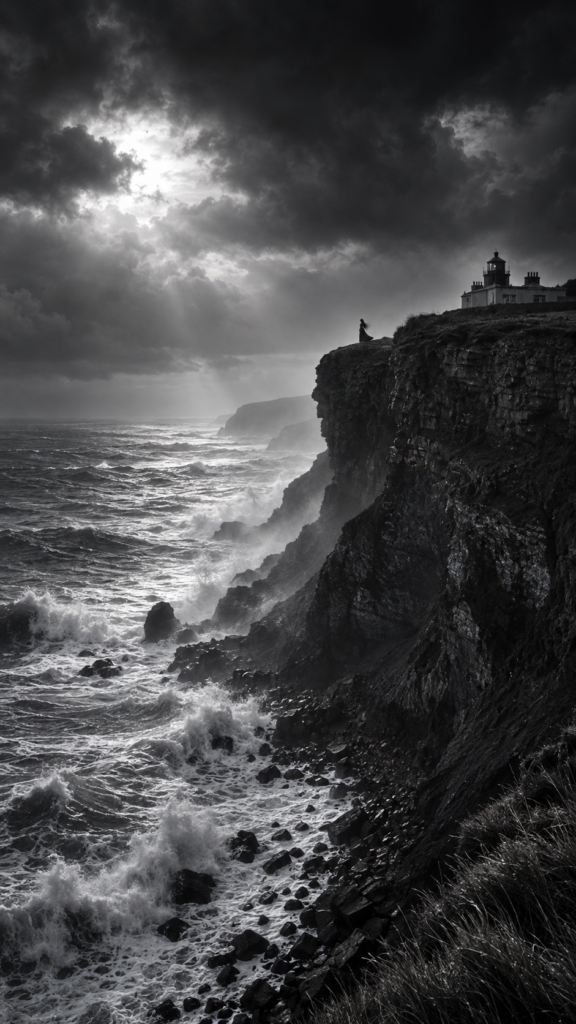
The Siren Of Saltwick Bay
Obviously, that’s an exaggerated and rather ridiculous example. But I can see something of the same instinct in the absolute rejection of anything produced with AI. The identity of the creator, or the technology involved, becomes more important than the thing being judged.
Now, there are perfectly legitimate questions about artificial intelligence. Copyright, employment, consent, the use of existing artists’ work in training systems, and the consequences for creative industries all deserve serious discussion. I’m not suggesting we should ignore those concerns, nor am I claiming that every AI creation deserves praise.
But there’s an enormous difference between having concerns about a technology and being rude to somebody who is simply trying to learn how to use it.
I’ve seen Kelly Boesch’s work. I’ve listened to that extraordinary song. I’ve experienced the emotional response her creations can produce, and nobody is going to convince me that those feelings somehow don’t count because artificial intelligence was involved.
And here’s what I find particularly exciting.
We’re still at the very beginning of all this. These tools are improving remarkably quickly, and we’re only just discovering what can be done with them. I suspect that some of the things we’re struggling to create today will be comparatively straightforward in ten years. Entirely new forms of storytelling, filmmaking, music and visual art may emerge that we haven’t even imagined yet.
Perhaps some of it will be dreadful. Perhaps some of it will be magnificent. Most likely, just as with photography, filmmaking and music today, there will be an enormous amount of mediocrity with the occasional extraordinary talent rising above it.
The technology won’t magically make everybody an artist. But it might give people with ideas, imagination and limited resources opportunities they never previously had.
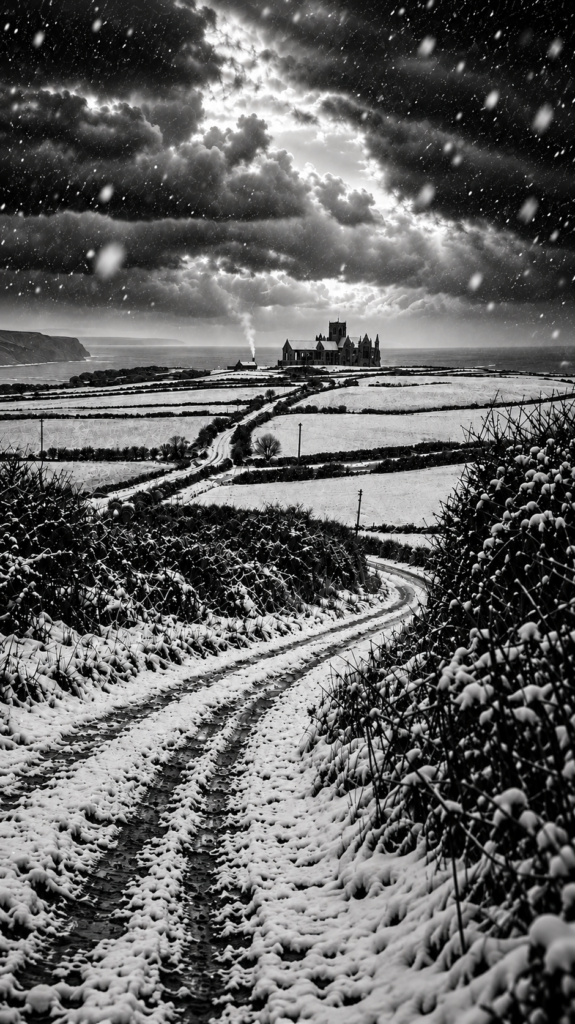
The Siren Of Saltwick Bay
And I think that’s worth getting excited about.
I’m writing these thoughts down in October 2026 because I suspect we’re living through a rather interesting moment in history. I believe artificial intelligence, if developed and used responsibly, has the potential to do tremendous good for humanity, well beyond making pictures and songs. I also suspect that it will eventually become so commonplace that people will hardly give it a second thought.
Perhaps somebody will stumble across this article twenty or thirty years from now and find it amusing that people once became so angry about somebody making a little film with a computer.
They might wonder why early adopters were ridiculed for experimenting with technology that eventually became part of everyday life.
Or perhaps they’ll look back and decide that some of the concerns expressed in 2026 were entirely justified. That’s possible too, and history will be a much better judge than I can be today.
But whatever happens, I’m rather pleased to be here at the beginning, watching it develop, trying things out and occasionally creating something that makes me smile.
I may never be particularly good at it. But I’m having a wonderful time learning.
And as for that song about Alice before the fall?
Well, it’s still going around in my head.
And I still think it’s fucking amazing.