In the Blink of an Eye – Billy’s Story of the Sinking of the Spitfire
On 10 September 2025, a fishing trip in the Firth of Clyde turned into a fight for survival when the wooden trawler Spitfire suddenly capsized and sank. For one young fisherman, now working out of Whitby, it was an experience he will never forget.
Regular viewers of The Whitby Photographer’s fishing videos may already be familiar with Billy, a young Yorkshire fisherman who crews aboard the Whitby potting vessel Melanie S with skipper Dean Clews, better known to many of us as Deano. Billy is an enthusiastic young fisherman who clearly enjoys his work and has spent time working aboard different vessels, gaining experience and learning his trade. For a period, Billy left Whitby to work in Scotland aboard the wooden trawler Spitfire, registered LH107.
I recently caught up with Billy at Dean’s warehouse in Whitby, where the lads were busy mending fishing pots and sorting their gear. It’s perhaps something many people don’t appreciate about the fishing industry: just because the weather is too bad to go to sea doesn’t mean fishermen get a day off. There are always pots to repair, fishing gear to maintain and jobs to do aboard the boat, ensuring everything is ready for the next opportunity to get back to sea. It was while they were getting on with these jobs that Billy told me the remarkable story of how he came frighteningly close to losing his life.
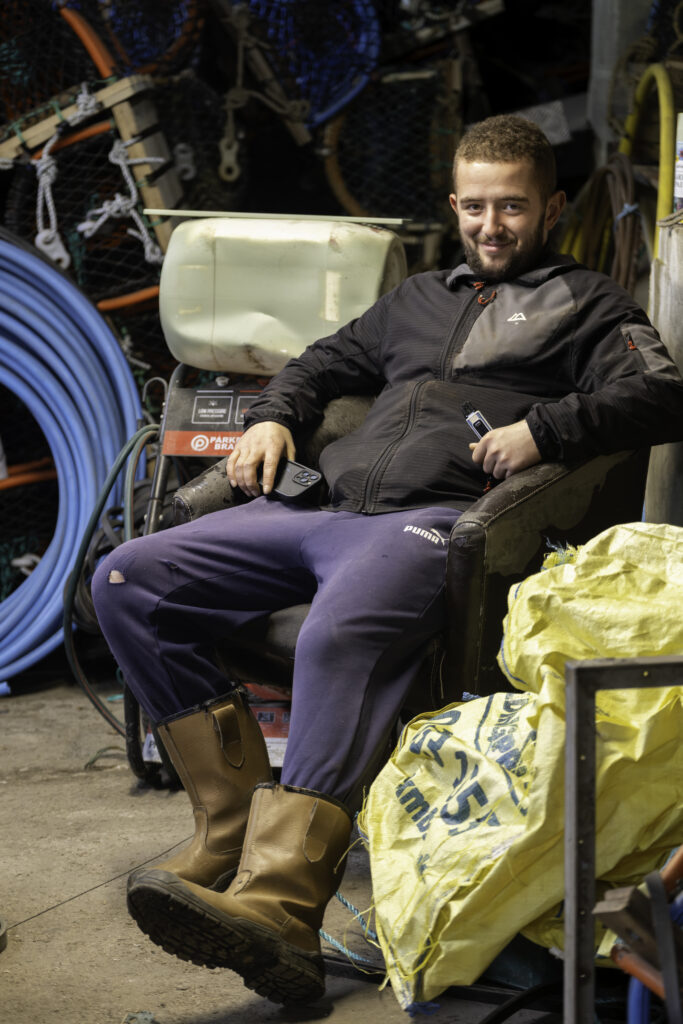
Billy Ellis Whitby Fisherman Discuss The Sinking Of The Scottish Trawler Spitfire
The Engine Room Was Full of Water
On Wednesday 10 September 2025, while fishing in the Firth of Clyde, Billy found himself caught up in an emergency that could very easily have cost him his life. He remembers becoming aware that the Spitfire was taking on water, although initially he had no idea just how serious the situation had become. Fishing vessels are equipped with pumps to deal with water entering the bilges, but there is an enormous difference between a little water collecting in the bottom of a boat and a vessel that is rapidly flooding.
Billy’s immediate reaction was to grab his lifejacket and put it on, a decision that may well have saved his life. He then went to inspect the engine room to establish just how much water had entered the vessel. What he discovered was alarming, because the engine room wasn’t simply taking on a little water; it was already flooded almost to the underside of the deck boards above.
Billy immediately realised they were in serious trouble and that it was time to abandon the vessel. But although the situation was clearly desperate, he still expected the Spitfire to take some time to sink, giving them an opportunity to prepare. What happened next took him completely by surprise.
Gone in the Blink of an Eye
Instead of gradually settling into the sea, the Spitfire suddenly rolled onto her side and disappeared beneath the surface with frightening speed. Billy described how the whole thing seemed to happen in the blink of an eye, leaving almost no time to react. One moment they were aboard a working fishing vessel and the next, Billy and his skipper were in the water, with their boat disappearing beneath them.
It is difficult to imagine just how quickly such a familiar working environment can become a life-threatening situation. A fishing vessel is not simply a means of transport; it is your workplace, your shelter and, while you are at sea, your protection from the water surrounding you. In a matter of moments, Billy had lost all three, finding himself in the sea off the Scottish coast, waiting for help to arrive.
A Rescue That Became Another Emergency
At approximately 11.35am, the alarm was raised from the Spitfire, which was fishing north of Little Cumbrae Island, off the North Ayrshire coast. HM Coastguard launched a major rescue operation involving Coastguard Rescue Helicopter 199, Troon RNLI’s all-weather lifeboat and the Largs RNLI inshore lifeboat. Nearby shipping was also alerted, with two CalMac ferries, Glen Sannox and Loch Shira, responding to the emergency.
But the rescue operation itself was about to take an extraordinary and potentially disastrous turn. As the Spitfire capsized, Billy recalls that the trawler’s mast came down onto the attending Largs RNLI inshore lifeboat, RA Wilson, causing the lifeboat to capsize too. Suddenly, the very people who had gone to sea to rescue two fishermen found themselves in danger.
All four RNLI volunteers were thrown into the water when their Atlantic 85 lifeboat overturned. According to Billy, the collision also ripped two of the lifeboat’s inflatable sponsons away, causing extensive damage to the rescue vessel. He believes the lifeboat was subsequently scrapped, bringing a rather unfortunate end to a rescue craft whose crew had set out that morning to save lives.
Thankfully, the four volunteers were able to follow their training, right their lifeboat and climb back aboard. They were subsequently escorted safely back to Largs, where they were examined by paramedics and found to be uninjured. It was an extraordinary escape for the volunteers, who had unexpectedly become casualties of the very emergency they were responding to.
Meanwhile, Billy and his skipper were still in the sea, their own vessel having already disappeared beneath the surface. Billy confirms that both men were winched directly from the water by the Coastguard rescue helicopter, rather than being lifted from the deck of the sinking trawler as some early accounts suggested. They were flown to Largs Yacht Haven, where they were assessed by ambulance personnel before being released without reported injuries.
In all, six people had ended up in the water during an extraordinary maritime emergency, and remarkably all six survived. The combined response of the Coastguard, RNLI and nearby shipping had helped bring the incident to a safe conclusion for those involved. The Spitfire herself, however, was lost beneath the waters of the Firth of Clyde.
A Word About the RNLI
Perhaps this incident is worth remembering the next time we hear some of the imbeciles who refer to the RNLI as little more than ‘immigrant taxis’. I wonder whether those same people would be quite so dismissive if it were their son, brother or friend desperately waiting for help at sea. Billy, a young fisherman from our own community, is alive today following a remarkable Coastguard rescue, during which four RNLI volunteers also risked their lives in an attempt to help him and his skipper. Before directing negativity towards the RNLI, perhaps we should remember that these are ordinary people, often volunteers, prepared to put themselves in danger to save complete strangers, and one day those strangers might be someone we know and love.
A Boat With More Than Half a Century of History
The Spitfire was no ordinary modern fishing vessel, having been built in 1974 at the Weatherhead and Blackie boatyard in Dunbar. The wooden stern trawler measured approximately 10.4 metres in length and had spent much of her working life fishing from Dunbar, principally targeting prawns, although she had also fished for scallops and squid. She was one of the final vessels constructed by the Weatherhead and Blackie yard and had remained in the same family’s ownership for decades before being sold in 2024.
For more than half a century, the Spitfire had been part of Scotland’s working fishing fleet, surviving everything that life at sea had thrown at her. Her loss in September 2025 brought that long history to an abrupt end, and with the vessel sinking in deep water, she was never recovered. The Marine Accident Investigation Branch subsequently carried out a preliminary assessment into the sinking, but investigators were unable to establish the source of the flooding.
In February 2026, the MAIB confirmed that its assessment had been closed without proceeding to a full investigation. With the vessel never recovered, the precise cause of the flooding could not be determined. Exactly what happened to the Spitfire that September morning therefore remains a mystery.
Back Fishing in Whitby
What struck me most when talking to Billy was how matter-of-factly he described what must have been a frightening experience. He was quite happy to discuss the sinking and explained that he didn’t feel particularly traumatised by what had happened. Indeed, he was soon back doing what he enjoys most, and today he is once again crewing aboard the Melanie S with Deano, working pots from Whitby and continuing to build his experience in an industry that, despite its many dangers, remains very much a way of life.
But there was one small detail in Billy’s account that particularly stayed with me. He explained that occasionally, when one of Dean’s pots becomes snagged on the seabed, they have to apply additional engine power in an attempt to free the fishing gear. Sometimes, as the boat comes under strain, water can come aboard around the gunwales, and although Billy understands what is happening, the sight of water coming onto the deck now prompts an immediate reaction.
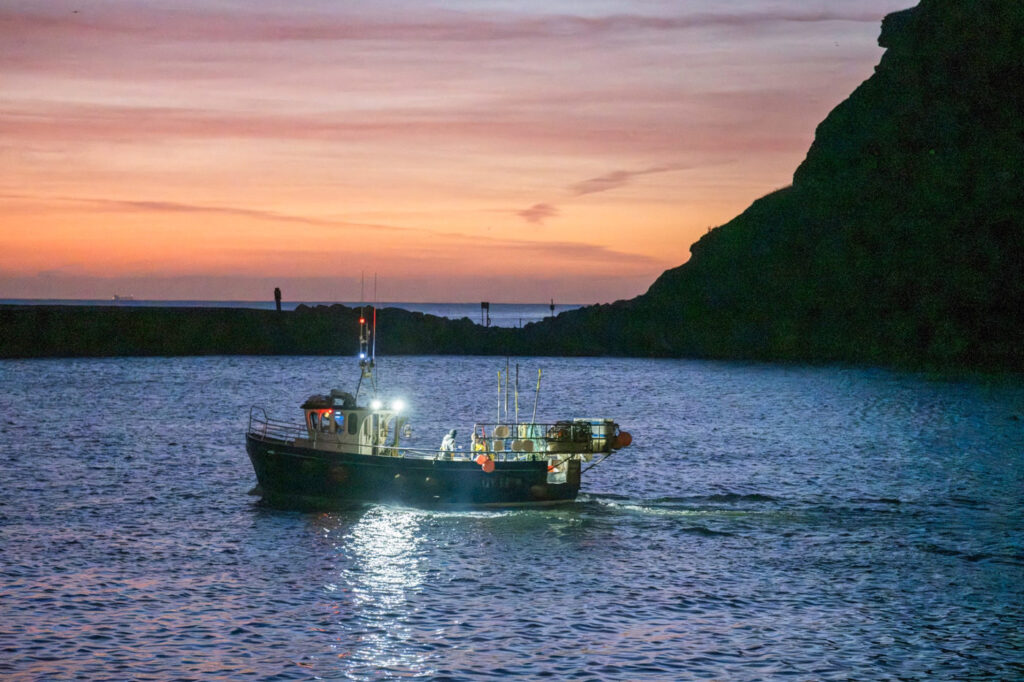
Billy Ellis Fishing Aboard The Melanie S At Whitby
Billy explained that when this happens, he instinctively checks his lifejacket, making certain that he is wearing it and that it is properly fitted. He still feels safe at sea and clearly enjoys his work, but having watched one fishing vessel disappear beneath him in a matter of moments, he knows just how important that simple piece of safety equipment can be. Perhaps it’s a small reminder that even when we believe an experience hasn’t particularly affected us, it can still change the way we respond to certain situations.
A Reminder of the Dangers of Fishing
Fishing is an industry that has always demanded a great deal from those who work in it. Our fishermen head out in all weathers, often working long hours, handling heavy equipment and operating in conditions that most of us would never dream of facing. Even when the weather keeps them ashore, as it did on the day I caught up with Billy, there is still work to be done maintaining the boats and equipment that their livelihoods depend upon.
It’s easy to watch a fishing boat leaving Whitby harbour on a beautiful summer morning and forget just how quickly circumstances can change. Billy’s experience aboard the Spitfire is a reminder that accidents at sea don’t always provide much warning, and that even experienced crews can find themselves in situations beyond their control. It is also a reminder of the extraordinary work carried out by our Coastguard rescue teams and RNLI volunteers, who are prepared to put themselves in danger to save others.
I am grateful to Billy for sharing his experience so openly and for allowing us to tell his story. There is something rather reassuring about seeing him back working alongside Deano, repairing pots in the warehouse one day and heading back out to sea when the weather allows. The Spitfire may have gone down in the Firth of Clyde, but thankfully Billy came home, and whenever I see him aboard the Melanie S, I shall remember that behind the familiar face of a young Whitby fisherman lies quite an extraordinary story of survival.
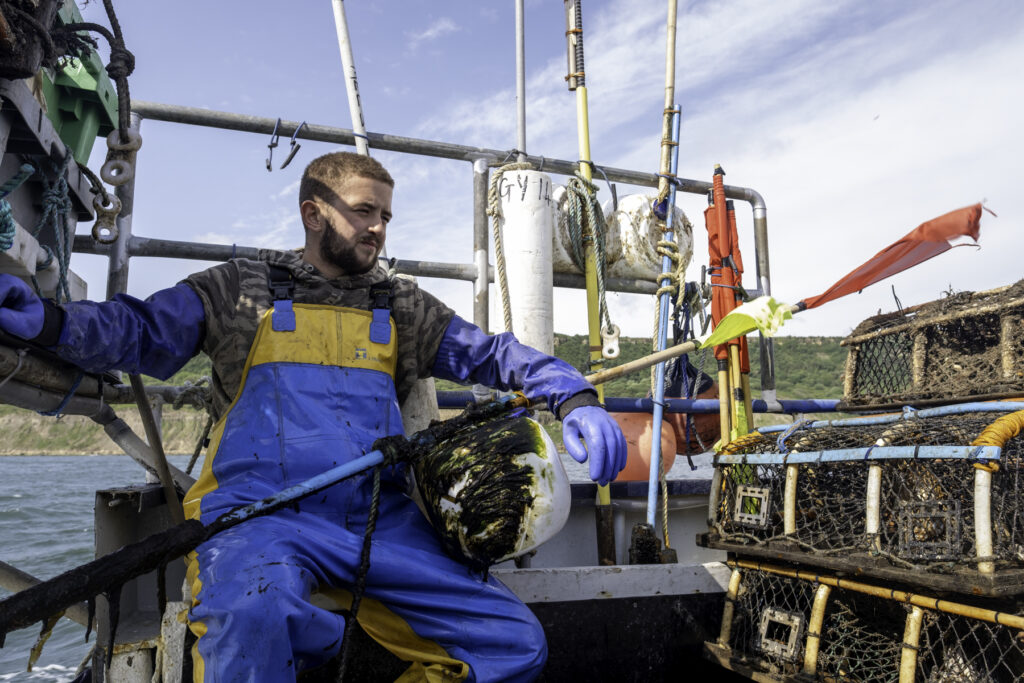
Billy Ellis Whitby Fisherman
The Whitby Photographer – Glenn Kilpatrick
Documenting Whitby’s fishing fleet, its fishermen and the stories of those who work at sea.