Around twenty years ago, possibly a little longer, I helped a marine biologist who was carrying out research off Whitby.
If my memory serves me correctly, his name was Nigel Proctor, although on the angling forums of the time he was known simply as “The Doc”, a reference to his academic qualifications.
Nigel worked as a freelance marine researcher and, as I remember it, was carrying out work connected with the British Government. He brought a catamaran to Whitby on a trailer, powered by twin outboards, and my very small part in all this was keeping him supplied with petrol.
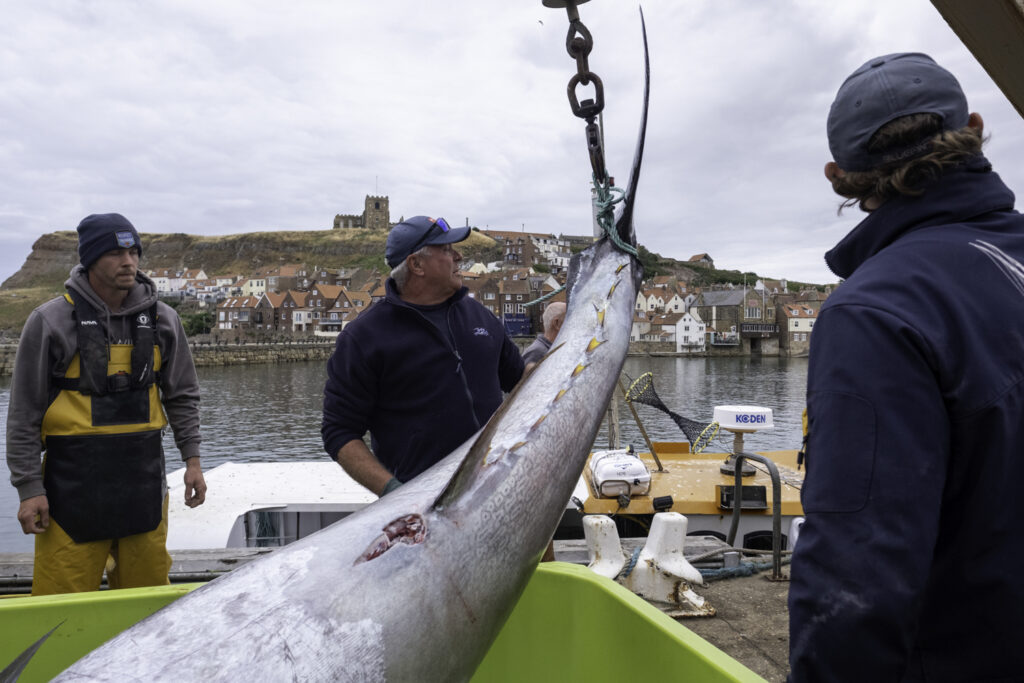
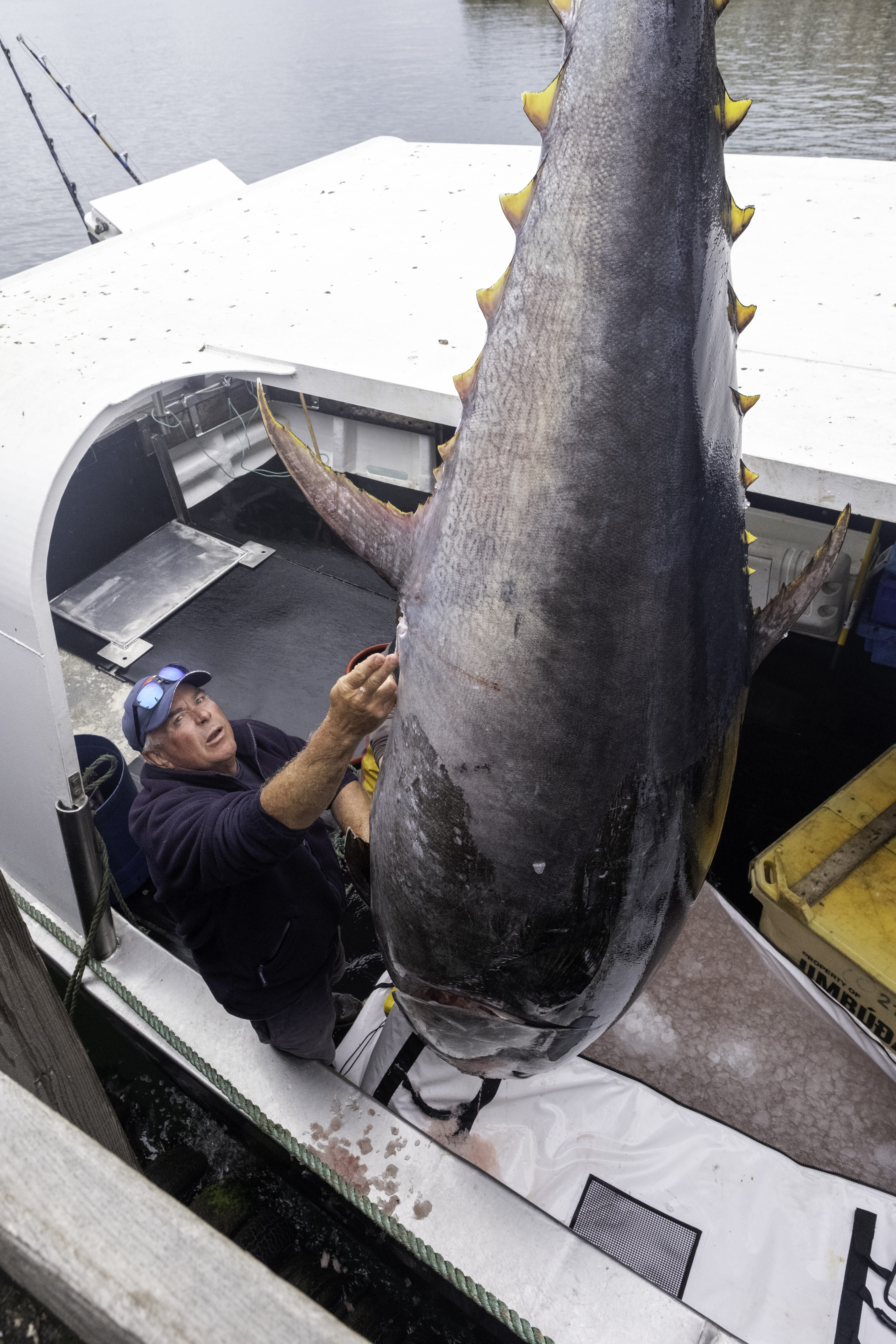
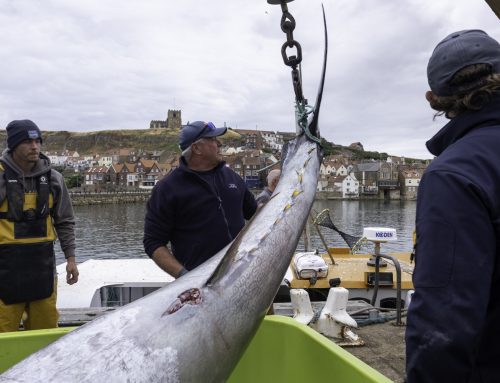
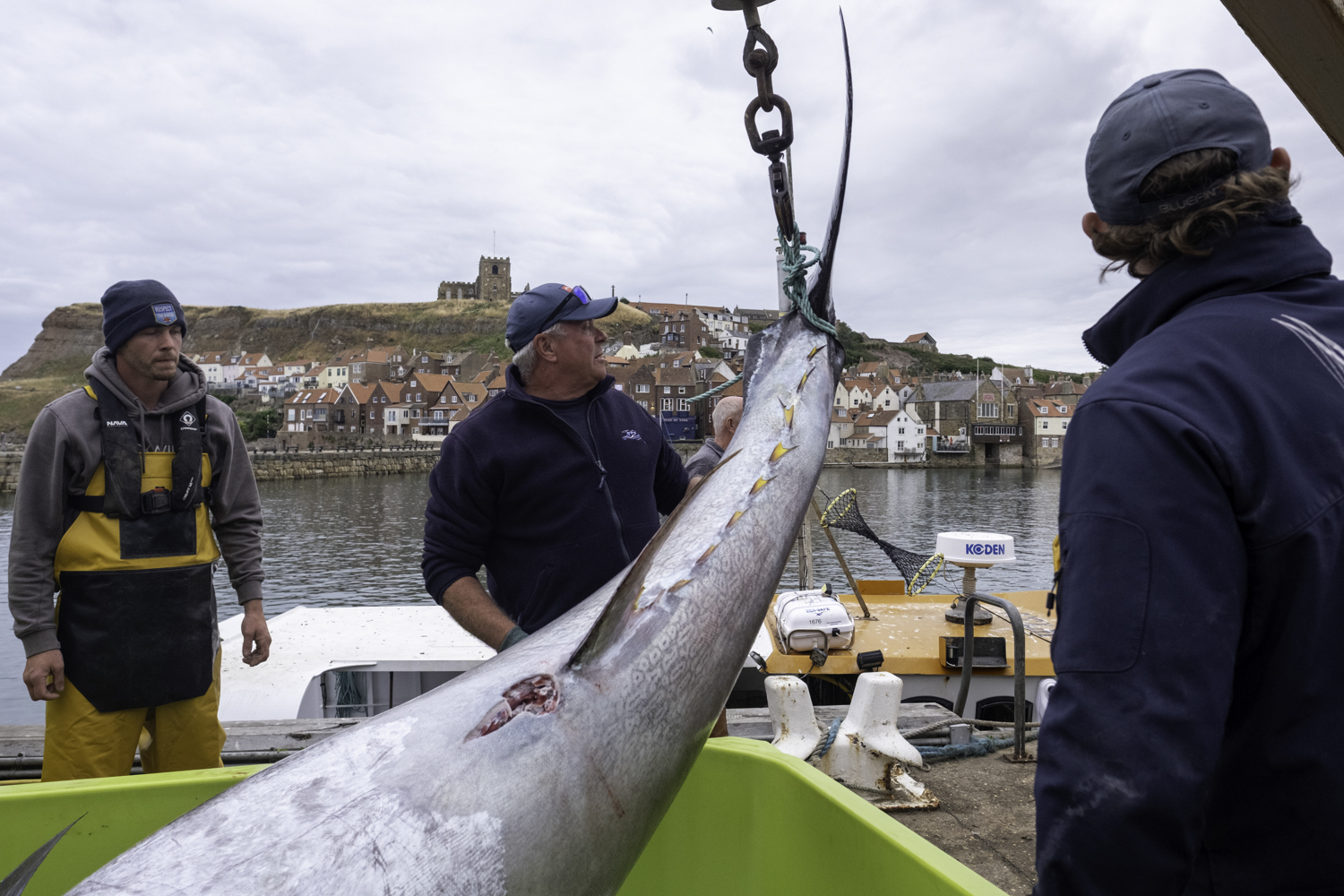
750 lbs Blue Fin Tuna Landed At Whitby
Each evening, when I delivered his fuel, we’d talk about where he’d been, what he was researching and what he was finding.
He was surveying the inshore waters and looking at fish stocks. One evening I asked him what he was seeing.
His answer has stayed with me for roughly twenty years.
The herring were coming back.
He told me he was finding large shoals of herring returning to the North Sea. I asked him what that would mean if the recovery continued.
I can’t pretend to remember his exact words after all this time, but I distinctly remember the message:
“If what I’m seeing continues, we’ll see the North Sea come alive.”
He went on to describe what he thought that could mean.
Within perhaps ten years, he believed we could see large numbers of dolphins along our coast. Whales of several species would visit. Seals would become increasingly common. Bird life would benefit enormously.
And then came one prediction which seemed rather more extraordinary at the time.
There was a very real chance that the tunny would return to Yorkshire.
Twenty years later, stand on the Yorkshire coast and look out to sea.
We have dolphins. We have whales. We have seals. We have extraordinary gatherings of seabirds feeding over shoals of fish.
And now we have Atlantic bluefin tuna — the great tunny — back off Yorkshire.
I often think about that conversation.
What Nigel was describing wasn’t really the return of individual species. He was describing what could happen when the foundations of a marine ecosystem began to recover. If the food returned, there was a chance that everything further up the food chain would follow.
At the time, I was simply delivering cans of petrol to a bloke with a research boat.
I didn’t realise I was being given a glimpse of what the North Sea might look like twenty years later.
And remarkably, much of what he predicted appears to have happened.
The challenge now is rather different.
We have watched what can happen when nature is given an opportunity to recover. The question is whether we have learned enough from the mistakes of the past not to squander it.
That responsibility now sits heavily with Government, fisheries managers and scientists. Bluefin tuna have returned to British waters and a carefully controlled fishery is developing around them.
Let’s hope it remains carefully controlled.
Because getting the tunny back after an absence of generations is quite an achievement.
Having to wait another eighty years because we got greedy again would be unforgivable.