THE TUNNY RETURNS TO WHITBY
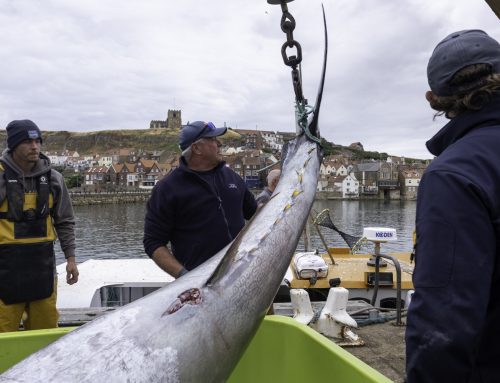
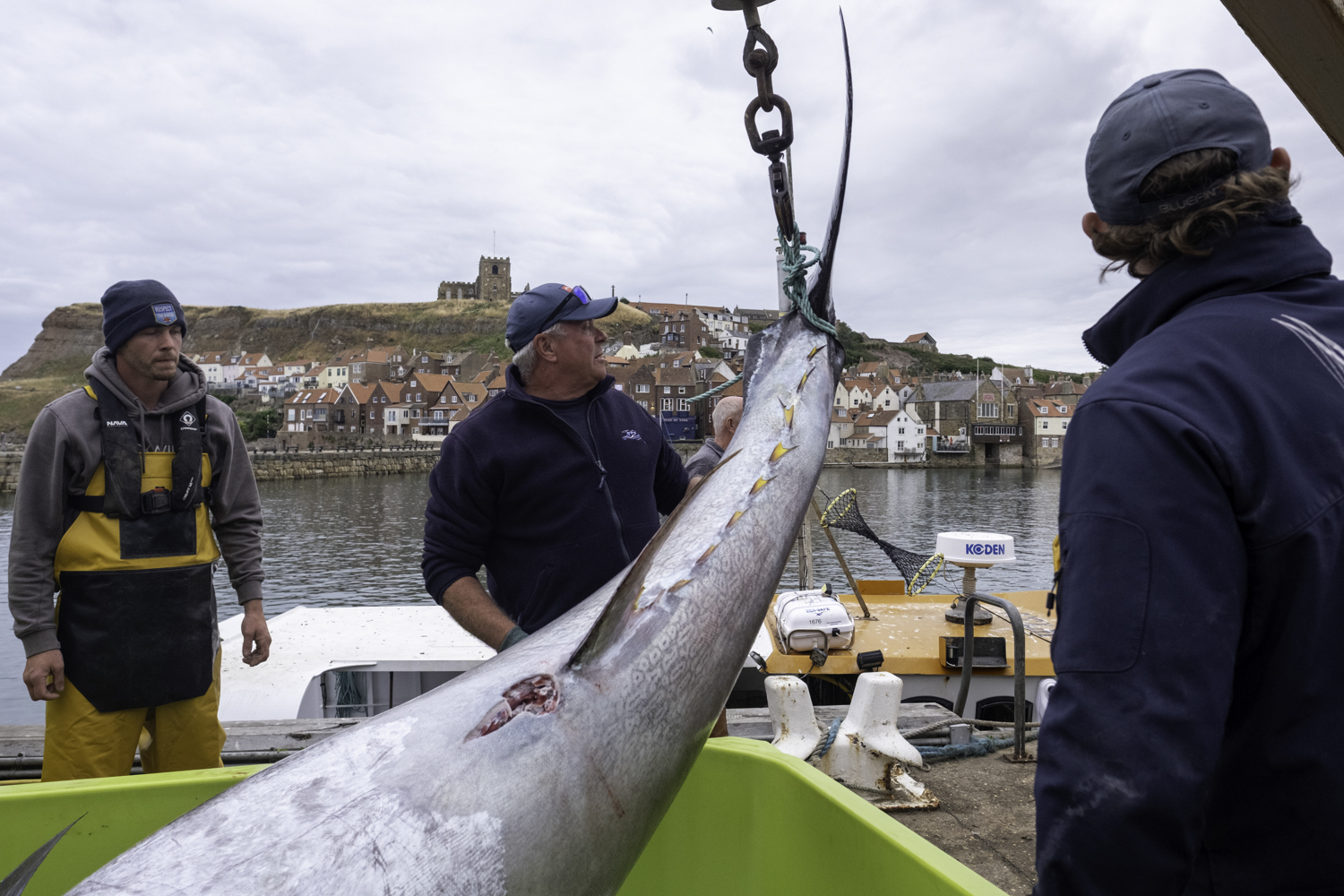
Today a truly enormous Atlantic Bluefin Tuna, or Tunny as these fish were always traditionally known here, was landed at Whitby.
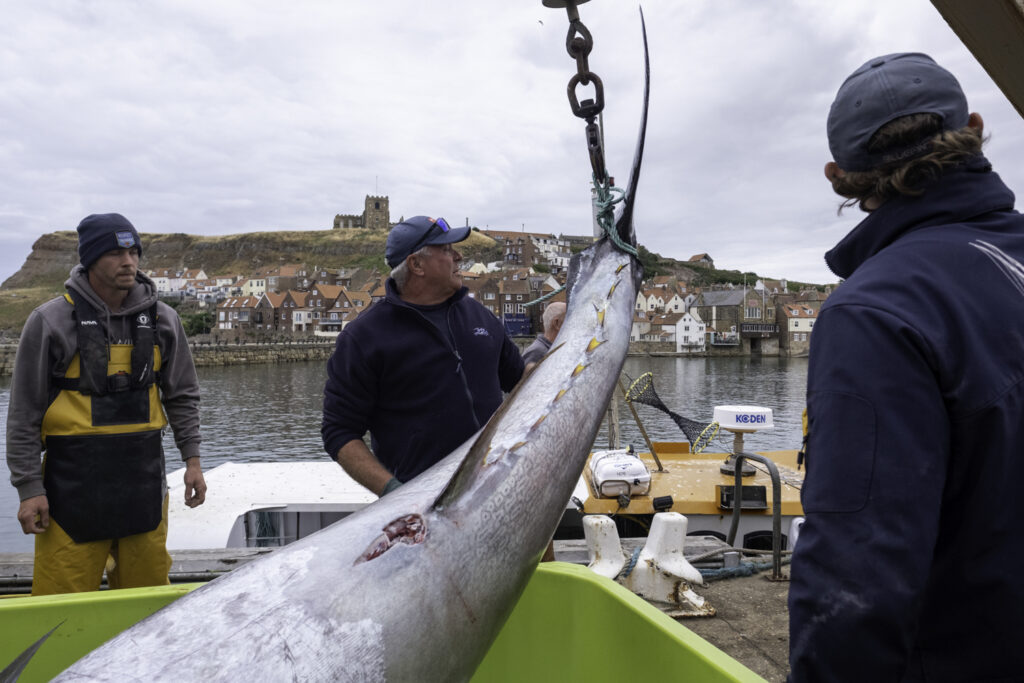
750 lbs Blue Fin Tuna Landed At Whitby
The live weight was calculated at 338.625kg, or 746.54lbs. After the internals were removed, the dockside weight was 302kg. That is one seriously big fish.
Perhaps more importantly from a local history point of view, I believe this may be the first Tunny landed at Whitby since 1939, although at present that date is based on anecdotal evidence rather than something I can state as absolute fact. I do recall reading of Tunny still being present off the Yorkshire coast during the 1940s and into the 1950s, although I am unsure whether any were landed commercially at Whitby after the Second World War.
These giant fish were present in the North Sea from at least the 1800s and became particularly famous here during the great Tunny fishing era of the 1930s. By the 1950s they had largely disappeared as the North Sea ecosystem changed dramatically and herring stocks collapsed through overfishing.
For me, the return of these fish should not simply be written off as another story about warming seas. What we are seeing off Yorkshire is also the result of a food chain which, in some respects at least, appears to be recovering.
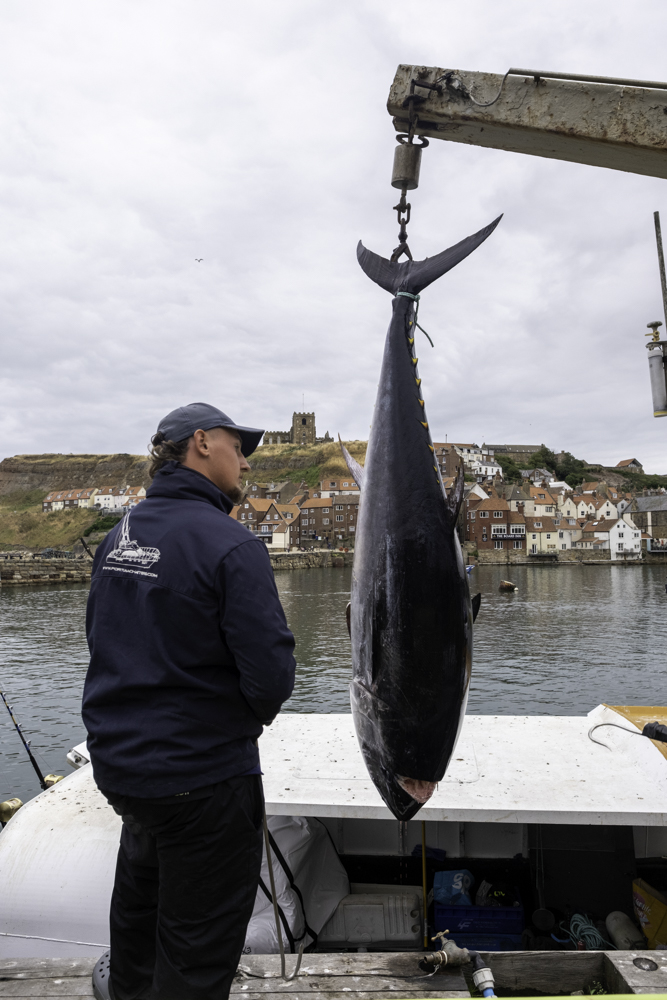
Whitby Tuna Fishing
Herring stocks suffered catastrophic declines during the twentieth century, but after decades of management they have recovered substantially from their lowest levels. That has not gone unnoticed by the wildlife around the Yorkshire coast.
We now regularly see Minke Whales, Humpback Whales and several species of Dolphin. Huge gatherings of seabirds can occur when the feeding conditions are right, and now one of the most legendary predators ever associated with this coastline has returned as well.
It also shouldn’t go without mention that the UK is now in its third year of the North Sea sandeel fishing closure. Sandeels are enormously important to the marine food chain, feeding everything from seabirds to larger fish which themselves become prey for whales, dolphins and Tuna.
Basically, if you protect the bottom of the food chain and allow the food to be there, everything further up gets an opportunity to flourish.
On a personal level, I think it is immensely important that we protect the North Sea’s herring and sandeels now. Their importance goes far beyond the fish themselves. The return of whales, dolphins and increasing numbers of other marine animals shows just how much can potentially be gained when there is enough food in the sea.
And for me, the arrival of the legendary Tunny is the icing on the cake.
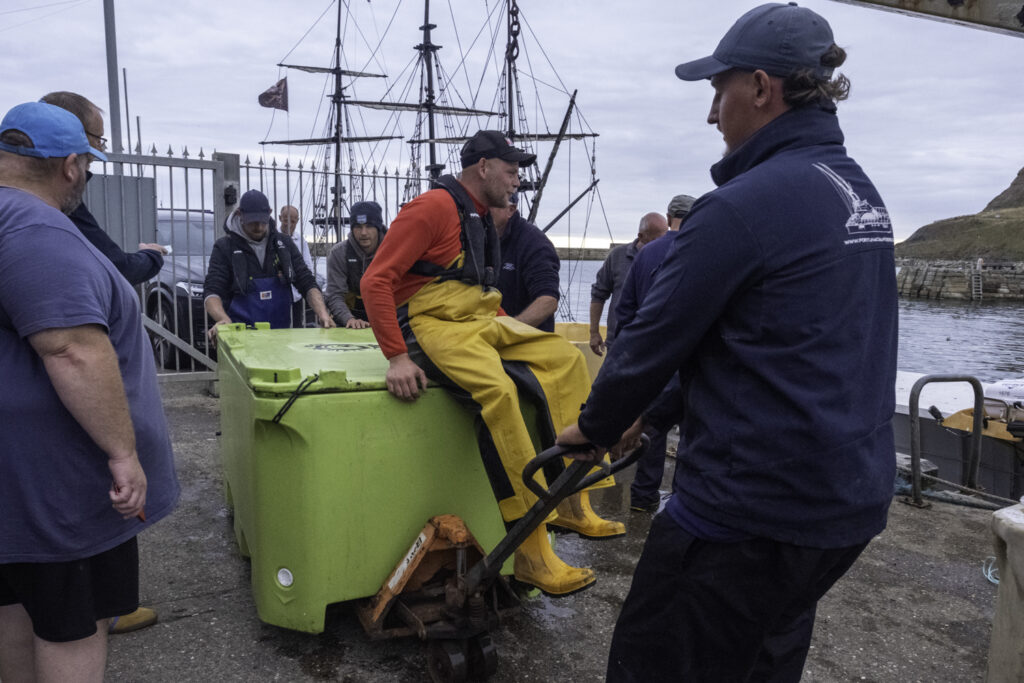
Today’s fish was caught by the crew of Whitby-based Dominator, which I understand is currently the only boat in this area holding a commercial licence to catch Bluefin Tuna. The fish are caught by rod and line, rather than by the large-scale commercial methods we might normally associate with Tuna fishing.
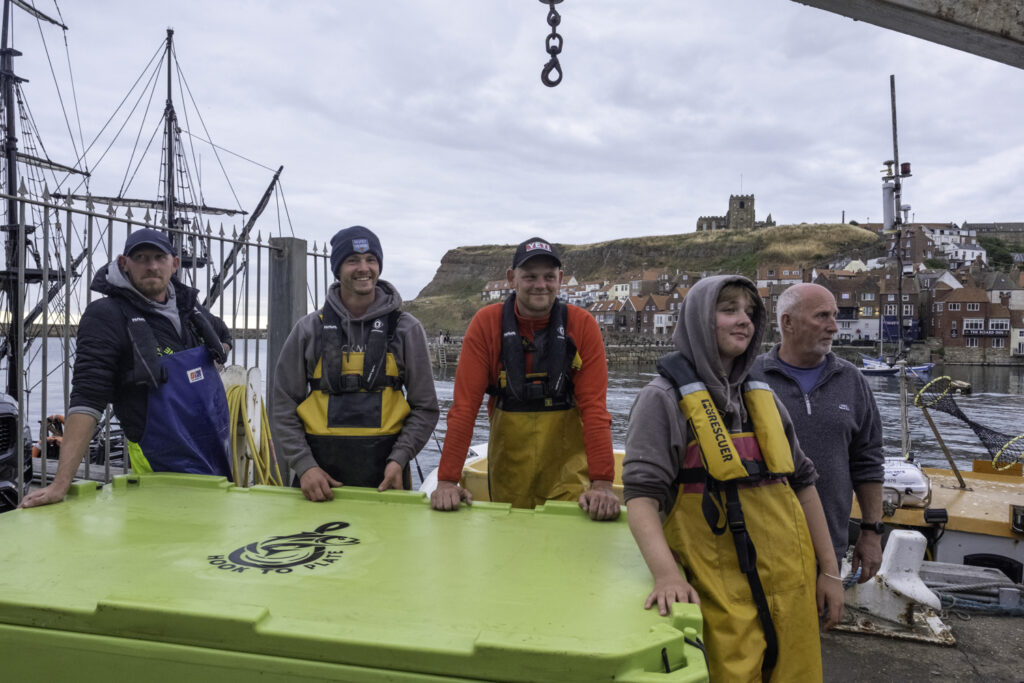
I watched Dominator return to Whitby this evening, sitting noticeably heavy to one side with the weight of the catch aboard. The crew were understandably pleased with their fish, which was sold to Hook To Plate Fish Merchants.
I’m told the fish will now be sold to restaurants here in the UK, and Hook To Plate will be putting more details about it on their website:
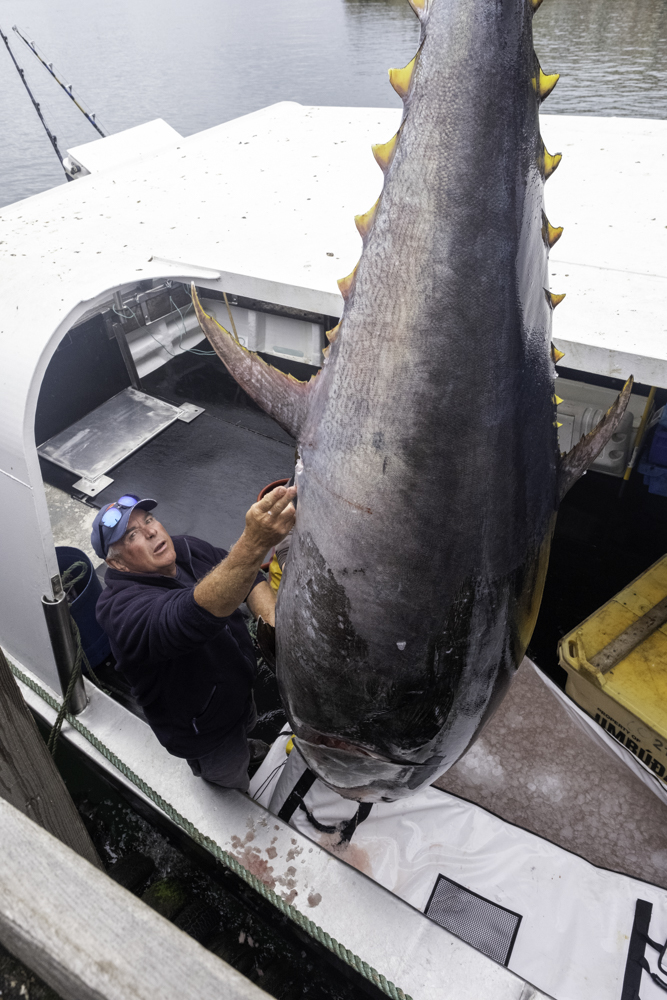
750 lbs Blue Fin Tuna Landed At Whitby
For me there is also a wonderful historical circle being completed here.
I’ve long been an avid fan of Chris Berry’s excellent book Tunny, which tells the extraordinary story of Britain’s old big-game Tuna fishery.
One of my favourite parts of that history concerns Lorenzo Mitchell-Henry. As the story goes, Mitchell-Henry fell out with the Tunny establishment at Scarborough, accusing them of fishing using “less than honest methods”, and brought his fishing to Whitby instead.
And Whitby did rather well out of that disagreement.
In 1933, Mitchell-Henry caught an enormous Bluefin Tuna weighing 851lbs while fishing from Whitby. More than 90 years later, it remains the recognised British rod-and-line record.
There was actually an even larger fish weighing 852lbs caught in 1949, but Mitchell-Henry successfully objected to the record because the rope used during weighing was considered excessively wet and heavy. His 851lb record survived.
Some of today’s local catch-and-release Tuna boats believe they have encountered fish which could exceed 1,000lbs, but because those fish must be released, their weights can only ever be estimated.
That means Lorenzo Mitchell-Henry’s remarkable Whitby record may survive for a very, very long time yet.
But tonight another giant Tunny has come through Whitby Harbour.
746.54lbs of Bluefin Tuna.
After an absence measured not in years, but in generations, that feels like quite a moment for Whitby and for the North Sea.